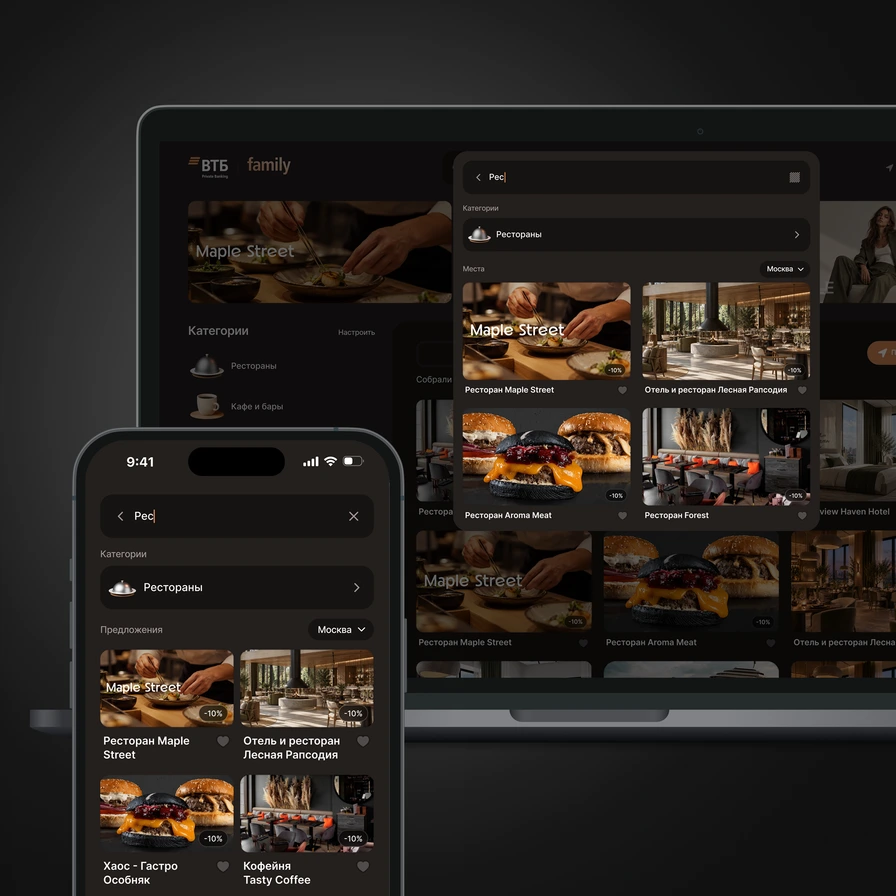
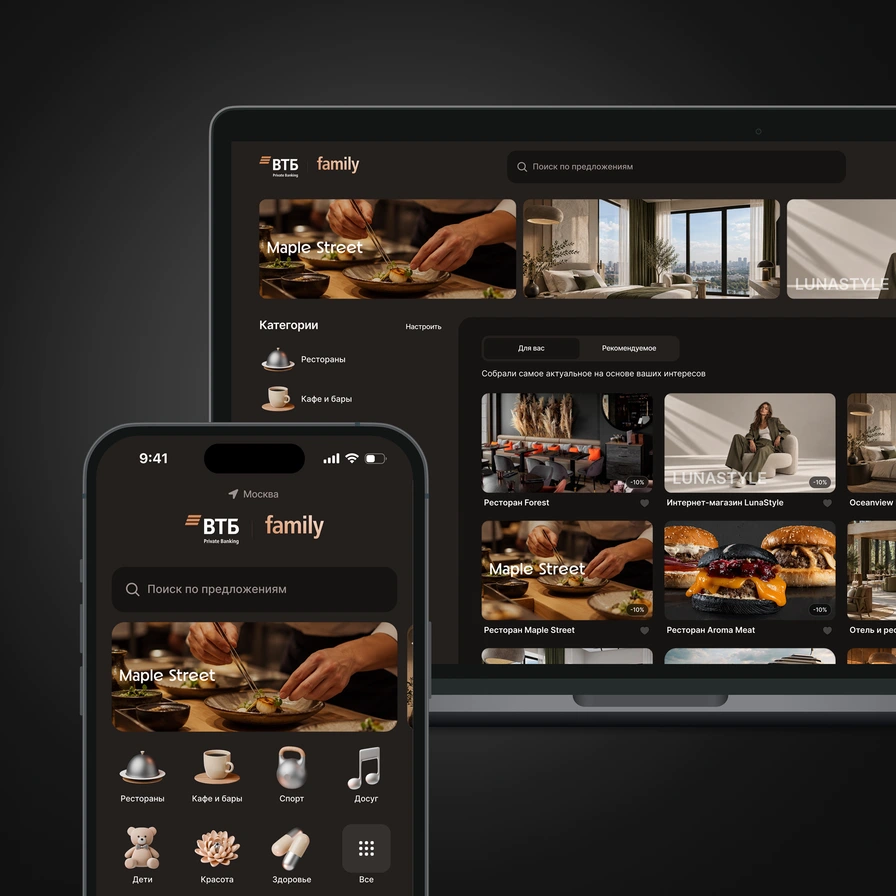
Responsive VTB Family interface on a laptop and smartphone featuring personalized offers, categories, and search

Development of a personal privileges and offers service

FinTech

A web-based loyalty program service with affiliate offers, promo codes, personalized delivery, and centralized content management

// Task

We have created one directory for thousands of different scenarios.


Imagine: You open the app, and there's something that suits you right away. Not a general showcase with discounts for everyone, but a selection for your city, your company, and your interests. Coffee shop next to the house. The restaurant you go to. An action that really works in your region.


The project is a closed loyalty program web service. It was necessary to create the technical basis of the service through which authorized users get access to partner offers, discounts and promo codes. The project was implemented as an independent technology platform: support for various data sources, personalized scenarios, integration with existing systems and content management through an administrative dashboard without the participation of developers. The technical solutions were designed taking into account the increased workload, the expansion of the catalog and the inclusion of new scenarios.

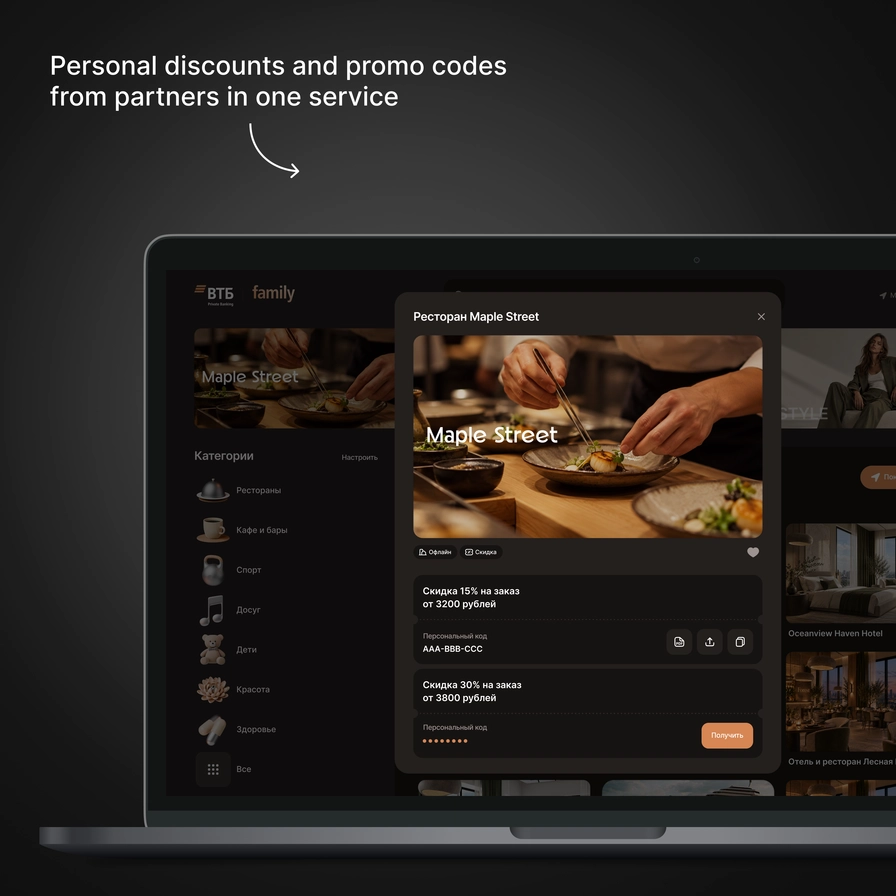
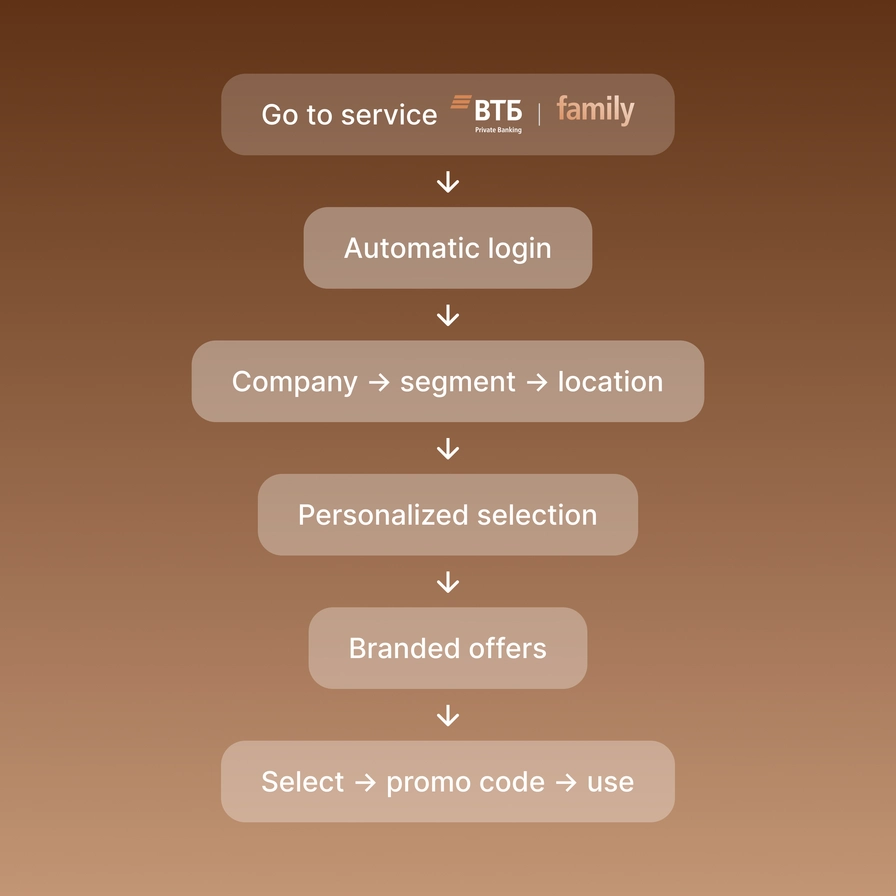
VTB Family user flow: automatic authorization, personalized offers based on segment and location, offer selection, and promo code usageVTB Family partner offer card featuring personalized discounts, promo codes, and usage conditions

// Solution

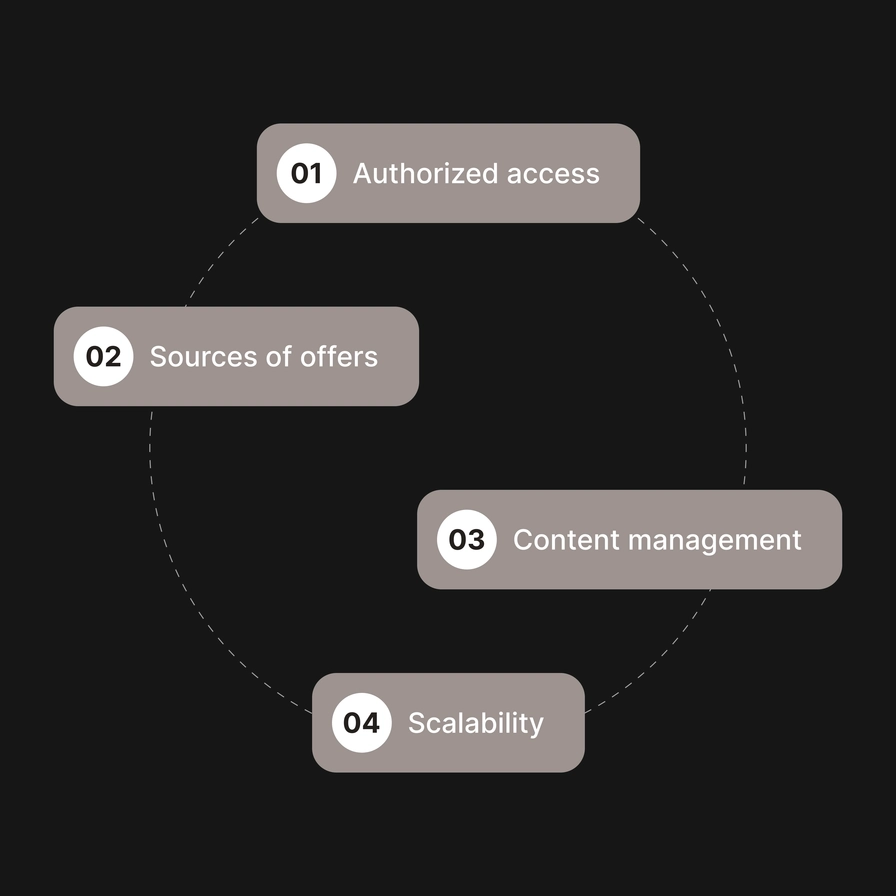
01. Key terms of the project

A closed user contour.
The service is intended for authorized clients. When switching from an external system, the user must enter the service already authorized.  

Development of supply sources.

At the first stage, the data came from external and other third-party sources. Later, it became possible to create and manage offers directly through the administrative dashboard.


A large volume of managed content.

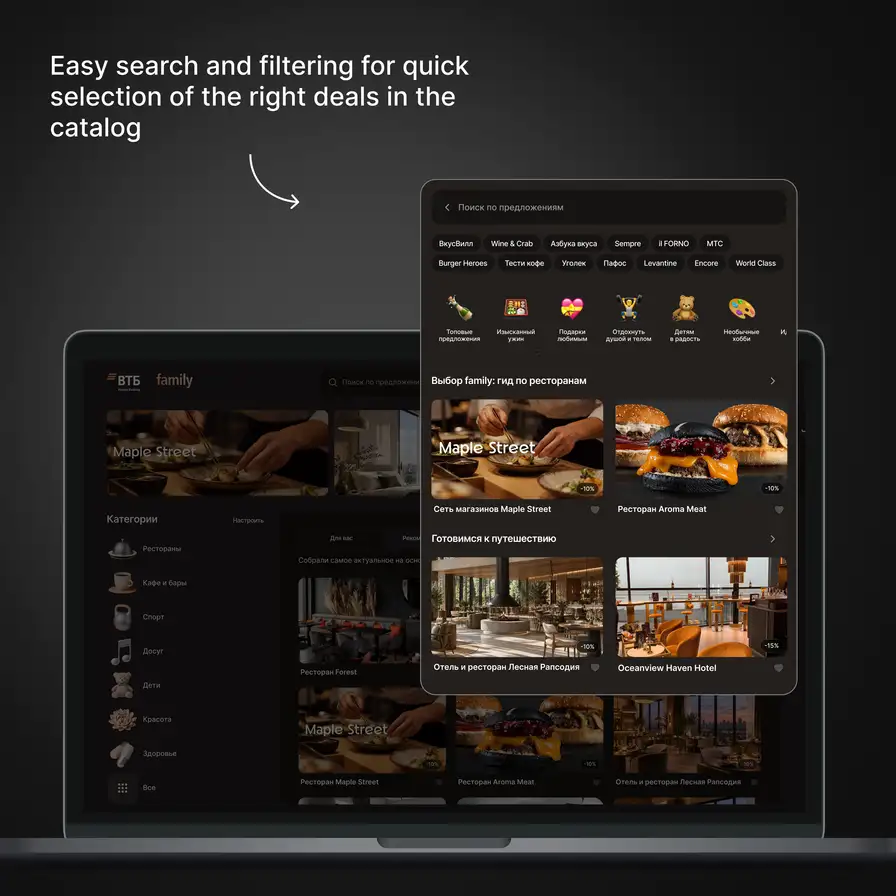
The catalog should support search, filtering, collections, segments, stock expiration dates, and other scenarios for working with offers.


Preparation for product development.
Technical solutions were designed taking into account the growing workload, the expansion of the catalog and the inclusion of new scenarios.

Key VTB Family architecture principles: authorized access, offer sources, content management, and scalabilitySearch and filtering in VTB Family with offer collections by category, brand, and user interests

02. Business task

It was necessary to create more than just a discount catalog. We needed a service that would become part of the customer experience and strengthen the loyalty program. Without this, all partner offers remained scattered: some were in an external source, some were in tables, and some did not reach the client at all.


The key problem was that the proposals existed on their own. The service couldn't manage them directly, couldn't quickly add new partners, couldn't build personalized scenarios.  

We have centralized partner offers in a single service, for which partners individually provide better deals than their regular loyalty program. We made them available to authorized customers and created a technical framework that can be developed along with the loyalty program.

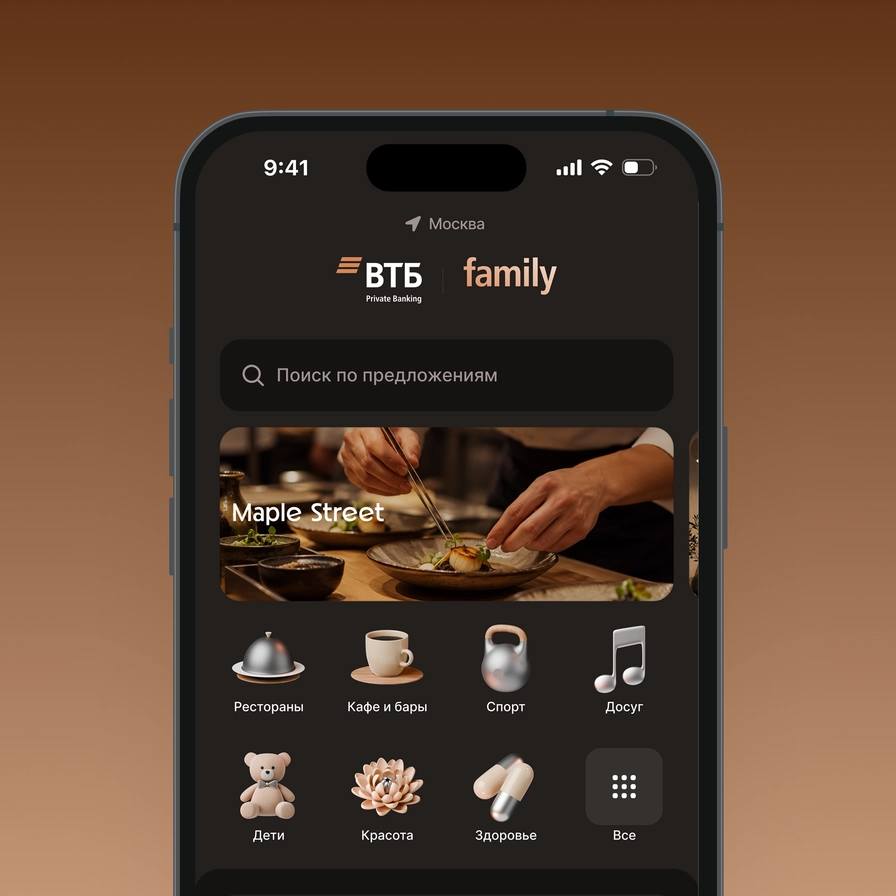
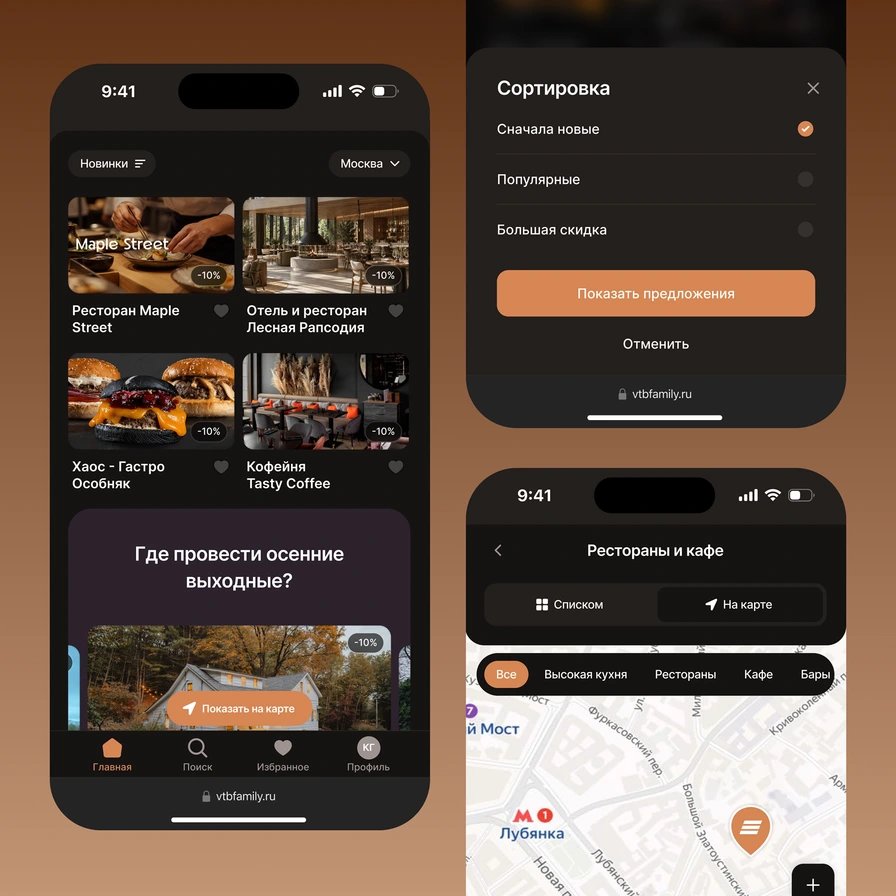
VTB Family home screen with offer search and categories of personalized privilegesVTB Family offer catalog with sorting, curated selections, favorites, and map view

03. What Bulltech and the Technology Stack have done

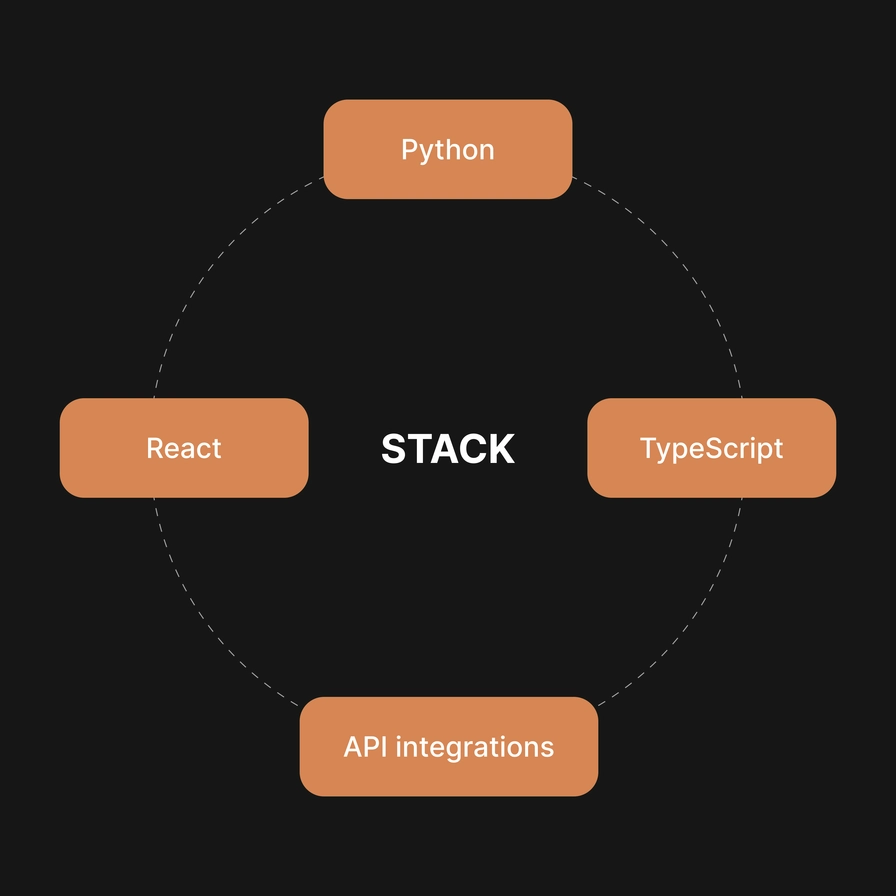
Bulltech was responsible for the full technical implementation of the project: from the implementation of the provided design layouts to building the server architecture and preparing the service for high loads. We have developed backend and frontend, implemented complex business logic, search engines, administrative tools, and API integrations to communicate with external and existing systems. The solution is based on the Python stack (backend) and React with TypeScript (frontend), which ensures the speed, scalability and reliability of the product.

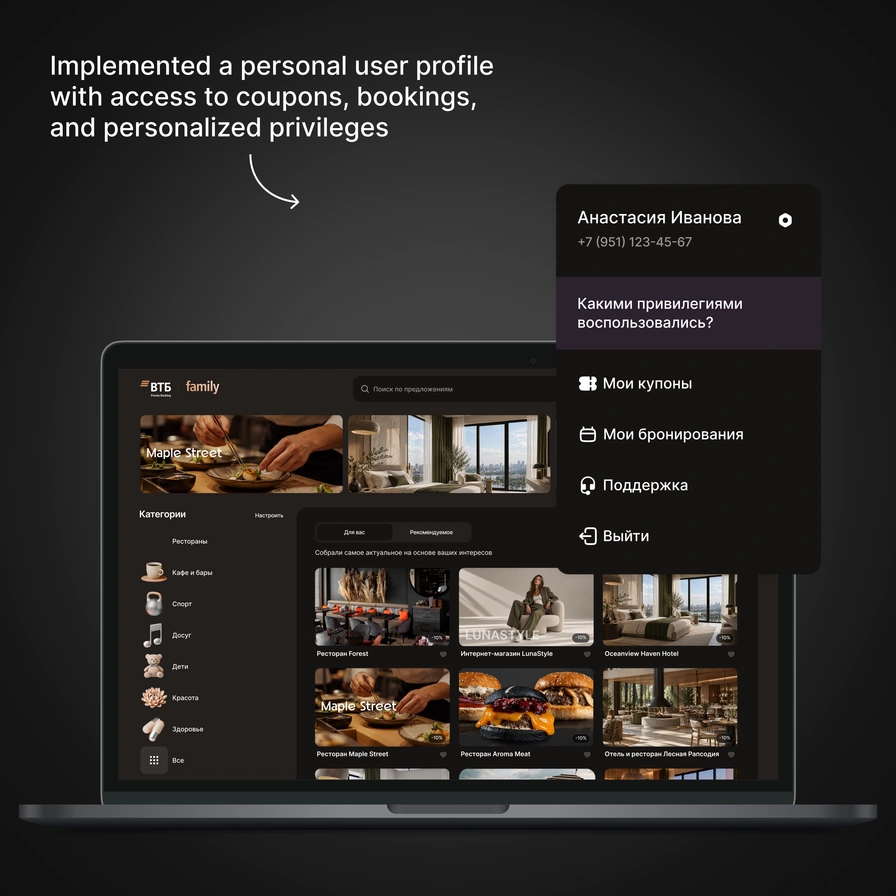
VTB Family user profile with access to coupons, bookings, support, and personalized privilegesVTB Family technology stack: Python, React, TypeScript, and API integrations

04. The integrations that made the service alive

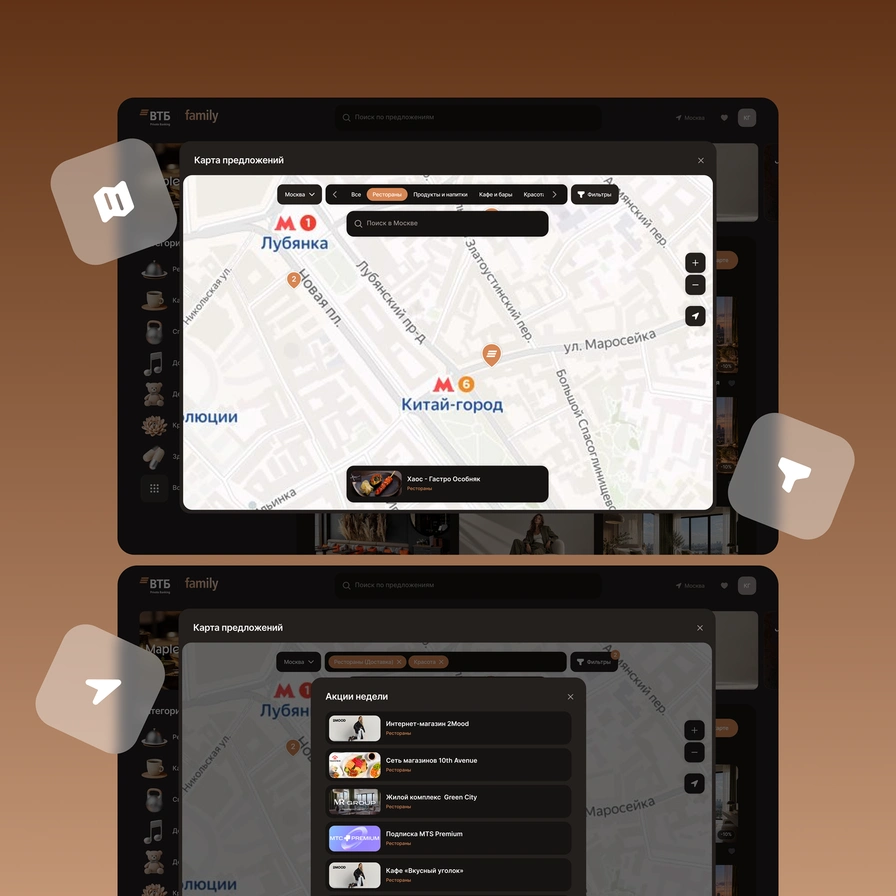
Maps and geocoder. Working with the geography of offers. The user sees stocks that are really close to him. Additionally, we implemented a business search.


Normalization of addresses. The user enters an address, and the system adjusts it to a single format. Fewer errors, fewer processing problems.


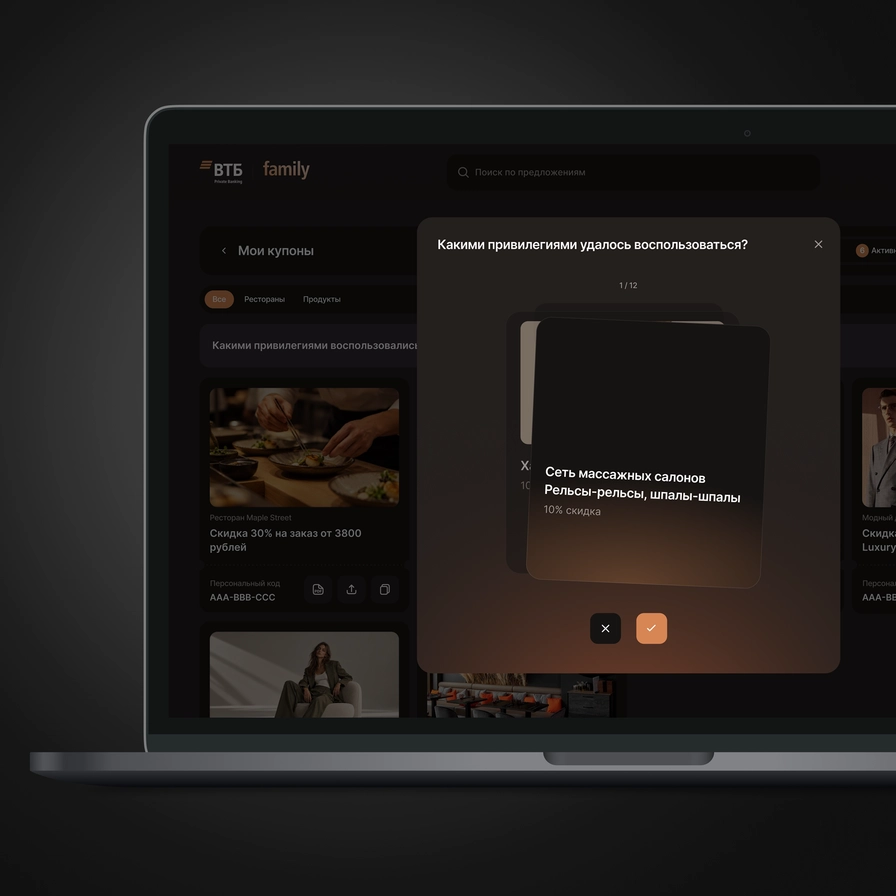
Collecting feedback and surveys. We don't know if the user used the promo code that they received. Therefore, we were given the opportunity to say this directly: to rate and write a comment.


Additional integrations. Collecting reviews and feedback, geo-searching for organizations, SMS and email notifications, integration with CRM and AI-based tools.

VTB Family offer map with filters, curated promotions, and partner locationsResponsive VTB Family offer search on laptop and smartphone with categories, location, and personalized discounts

05. Service development

Instead of developing an isolated catalog, we implemented a service in which the user part, search, offer sources and administrative mechanics work as a single system. We have redesigned the logic of the output so that each user sees his own. Not by one filter.  

First, the system looks at the user's affiliation to a certain company. Each company has its own set of available partners. Next, the system examines the user's interests. Then there is the location: if the offer works in the user's city, it rises to the top block, if not, it goes below. Inside the block, sort by the number of promo codes. Plus, manual prioritization from administrators: if it is important for a business to promote a specific promotion, it will take its place, but only in those regions where it really operates.


The technical basis of the project was built in such a way that the development of the loyalty program did not require rebuilding the entire product every time. For individual companies, the service can use its own design. Color scheme, logo, visual style. All this is configured through the administrative panel, without the involvement of developers. An employee of one company opens the service and sees familiar colors. Another employee has his own palette.


The MVP was launched by a team of five people: one backend developer, two front-end developers, a tester, and a project manager. The term is one and a half months. Then the service developed in sprints: in the two years since the launch, more than 100 releases have been released. Today, an expanded team is working on the project.

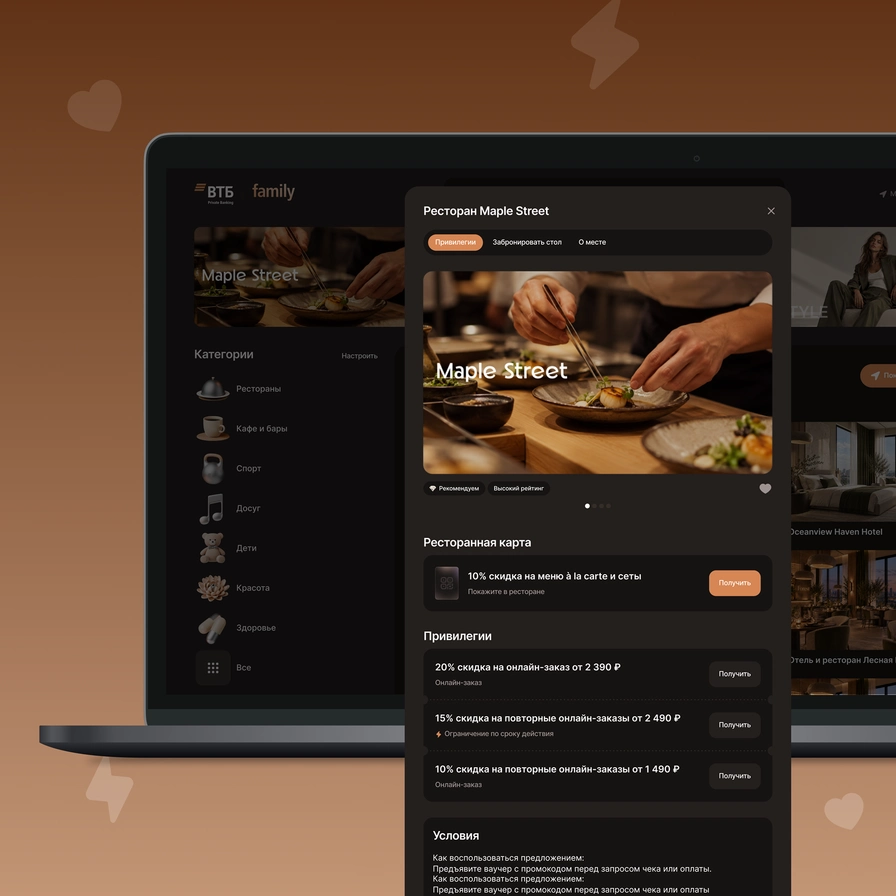
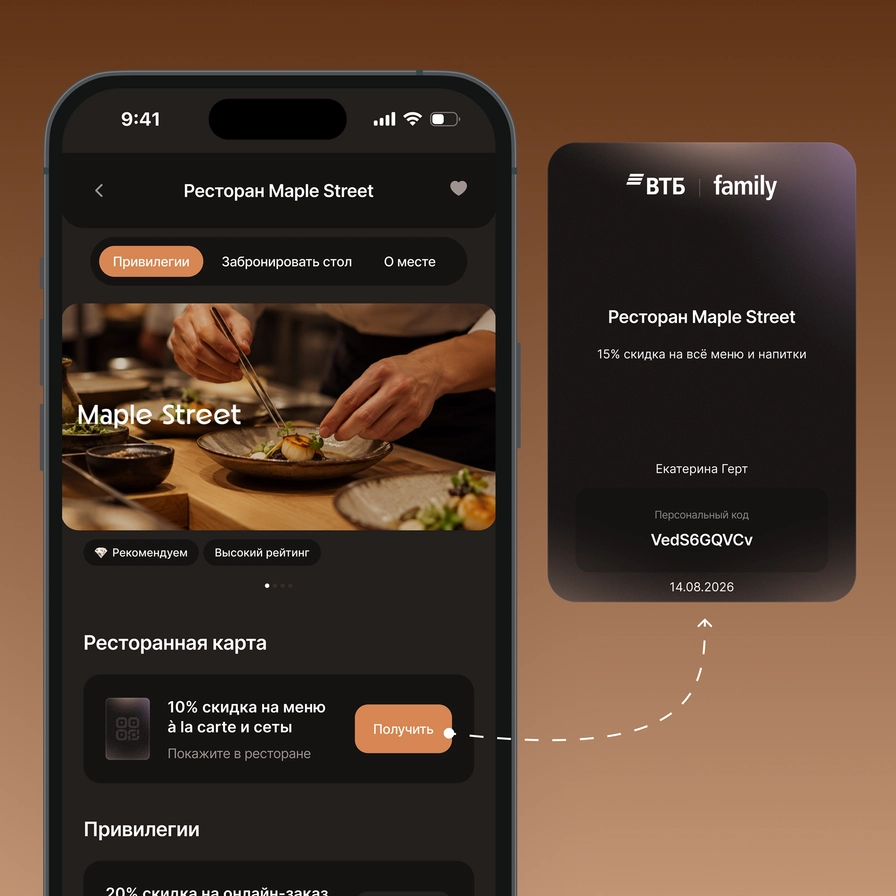
VTB Family partner card featuring a restaurant card, personalized privileges, discounts, and usage conditionsVTB Family mobile offer card with a personal promo code and partner privileges

06. Administrative Panel

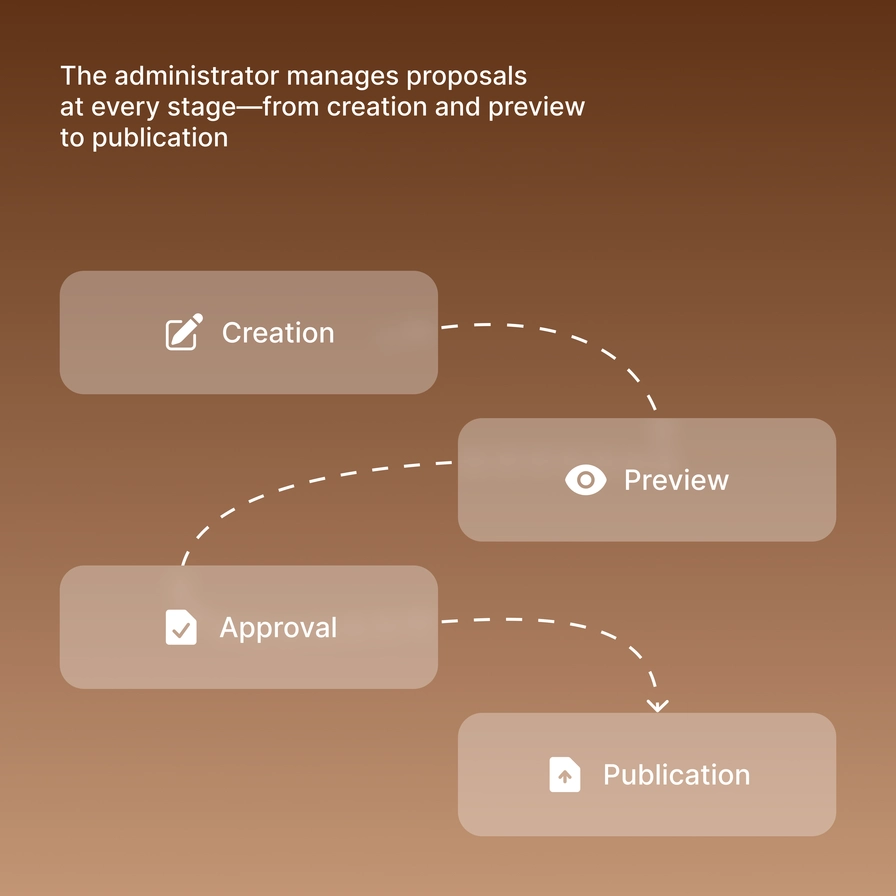
One of the key objectives of the project is to make the service manageable without the constant involvement of developers. We made it so that the administrator could create an offer directly in the system, see how it would look before publication and check that everything was correct, coordinate with a partner, and only then enable it. The preview works in the administrative panel and does not create anything in the user part.

The system monitors the validity periods of promotions and promo codes and notifies you in advance about the end of the period. Notifications are sent both to the mail and to the administrative panel.

Heavy operations are placed in the background tasks. The interface is not blocked. The administrator continues to work, and the system performs the operation in the background.

According to the team, all content can be updated through the admin panel without the involvement of developers.

VTB Family offer management flow: creation, preview, approval, and publicationVTB Family interface for rating used privileges and providing feedback on offers

07. A scale that is not visible from the outside

The project has an infrastructure that works daily and with a real load. The architecture was assembled from several modules. Instead, the functionality was clearly divided. Each module solves its own problem, and together they work as one system.

Regular load testing shows how the system behaves under peak scenarios, not just in quiet mode. Monitoring of key processes has been set up: we have a consistent picture of what is happening inside the service, not an after-the-fact report. The alert system works in conjunction with monitoring - if something goes wrong, the team finds out about it immediately, and not from users. Logging is designed so that you can quickly figure out any situation. This functionality allows the service to work stably and predictably when it is used by hundreds of thousands of people.

The integration approach allowed us to connect the necessary external services, while maintaining a single user logic of the product and leaving the possibility of scaling - we laid the integration layer so that in the future it would be possible to connect new sources of offers, new services and new scenarios without rebuilding the entire system. When the business is ready for the next step, the technical framework will already be ready for it.

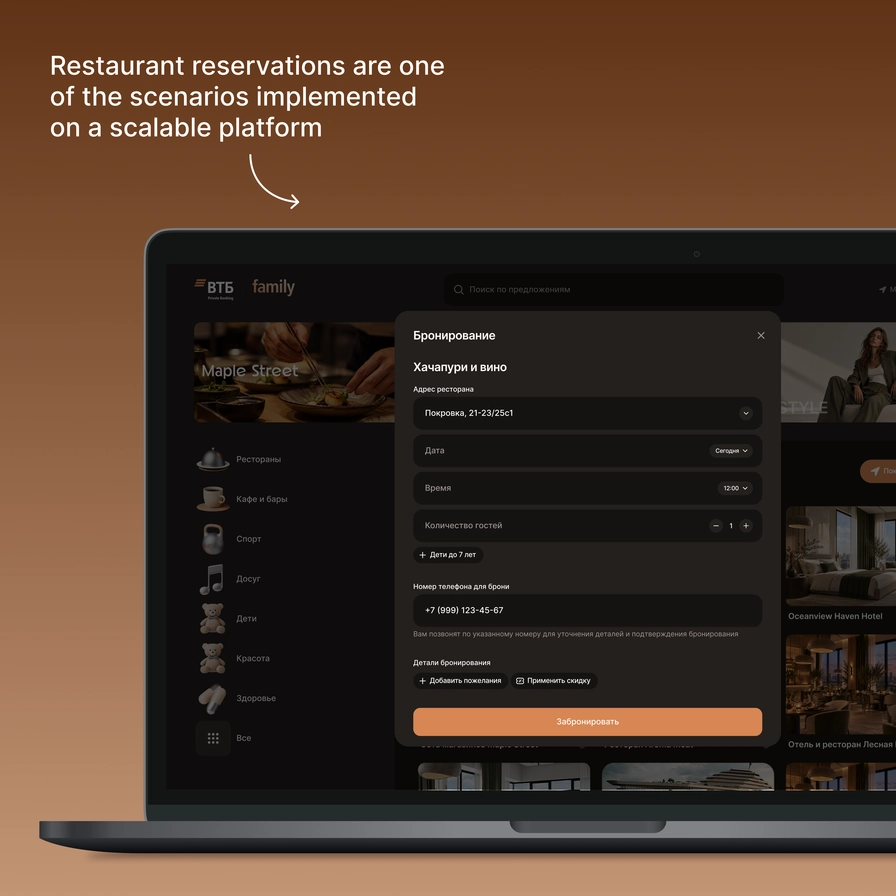
VTB Family monitoring, testing, and automated alerts for maintaining stable service performanceVTB Family restaurant booking flow with date, time, guest count, and privilege selection

// Result

As a result, a closed loyalty program web service was created. This is not an isolated catalog, but a technological platform that combines the user part, search, offer sources and administrative mechanics into a single system.
What has it done for the business?

The service has become manageable. All content, settings, and scripts are now managed through an administrative dashboard - without the involvement of developers. The service can independently add offers, customize the design for companies, monitor the validity period of promotions and respond to changes faster.

Personalization has been introduced at the user level. There is one service, but each has its own output, selected according to a specific user. With its own visual design. This is not a general showcase, but a personal experience for each authorized customer.

The service is ready for development. The architecture allows you to connect new sources of offers, expand the catalog, add scripts and increase the load without rebuilding the basic logic. What was laid out at the start works not only for the current set of functions, but also for future tasks of the loyalty program.

Technical stability has been confirmed. The system works under load, synchronizes data in real time, and undergoes load testing. Monitoring and alerts allow you to monitor the status of key processes and respond promptly to deviations.
What has been implemented:
– Development of a web service from scratch
- Seamless authorization
– Catalog of partner offers with promo
codes – Personalized search by company, region, segment and specific user
– Typo–resistant search engine and layout
– Administrative panel with preview
– Expiration and notification management
– Managed customization of design for companies
– External integrations
– Load testing and monitoring
– Background tasks for heavy operations
– Categories, tags, segments, banners, popups
– Invite codes and invitations
- Restaurant reservations
Built a foundation for the service’s further developmentReduced the business’s dependence on the development teamPrepared the system for increased load and data volumeMade the product resilient to future growth in business logic complexity

Let's discuss your project