MINPROMTORG
a service for systematization of production chains and import substitution reference books
// Task
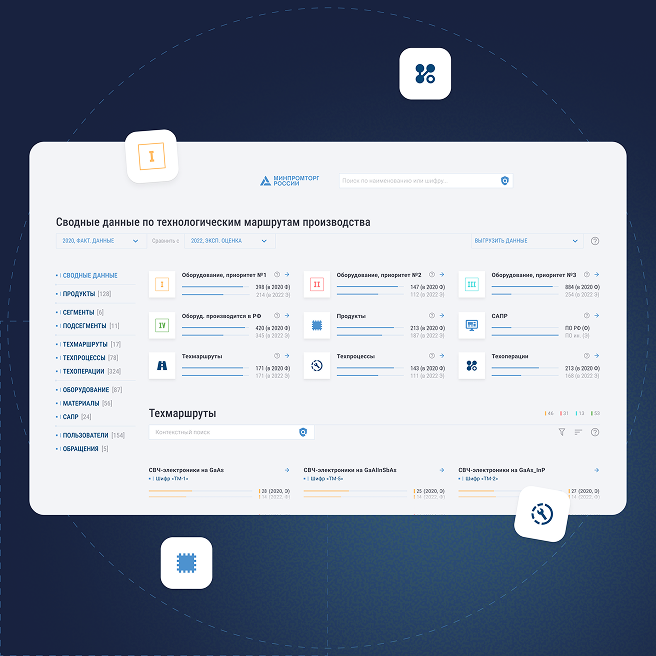
The Ministry of Industry and Trade needed to develop a service that helps to systematically produce goods by stages and see what materials, equipment and processes are needed to create the final product. The project is based on the logic of import substitution. It was important not only to collect the data, but to turn it into a clear working tool with reference books, stages and easy navigation. This task fits well into the general outline of industrial digitalization: GIS already maintains catalogs of industrial products and registers of Russian industrial products.
// Solution
01
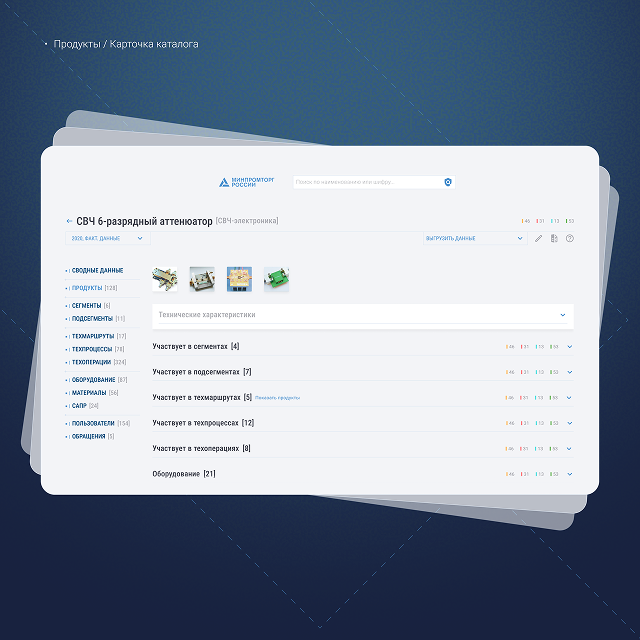
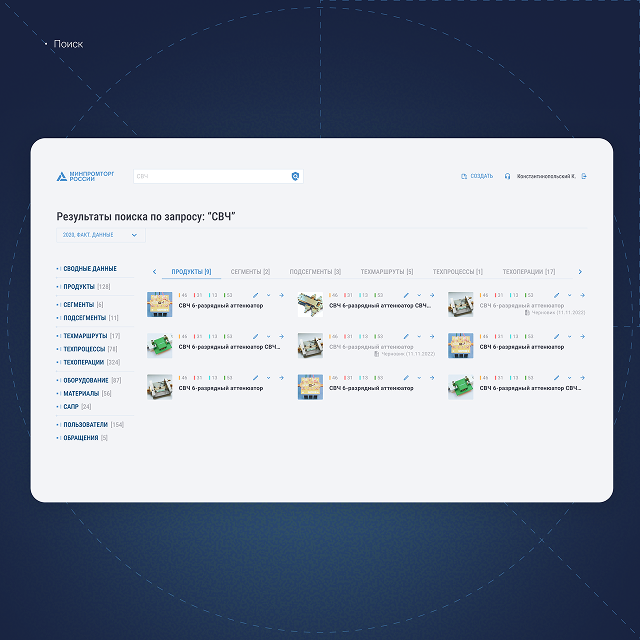
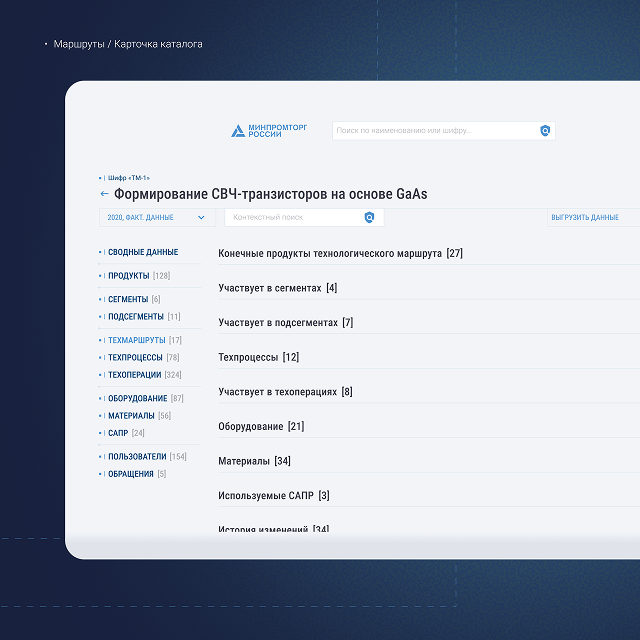
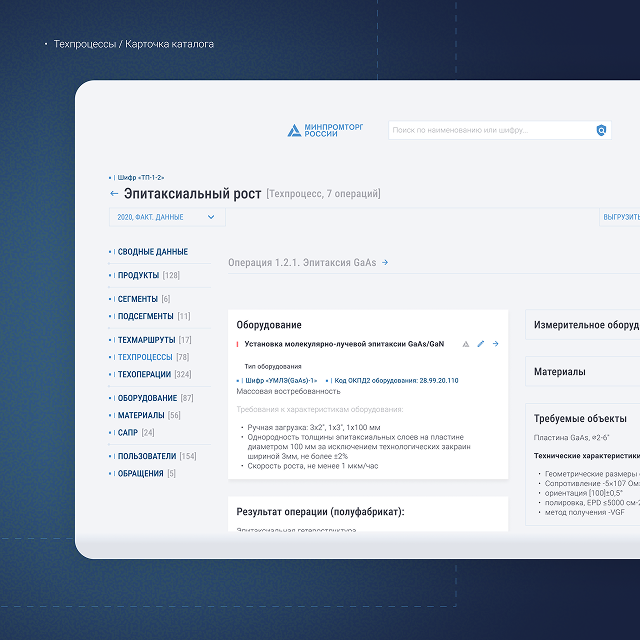
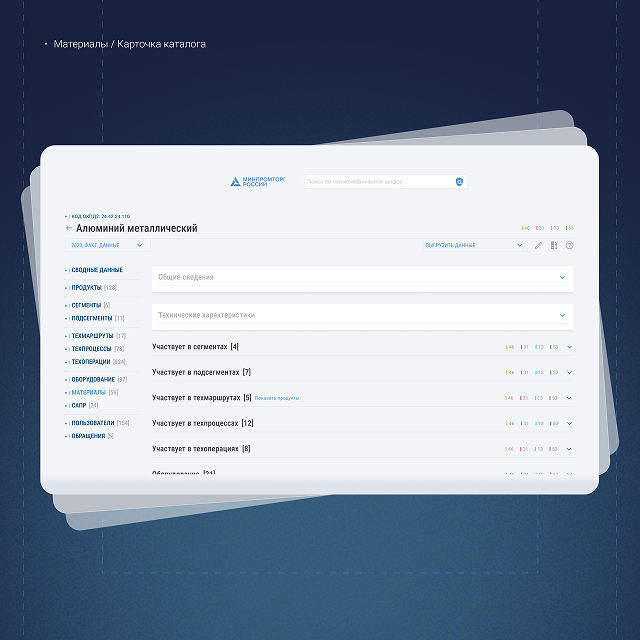
We have worked out the structure of the reference books so that it is easier for the user to navigate through a large amount of data, quickly find the necessary information and see the relationship between the product, materials, equipment and processes.
02
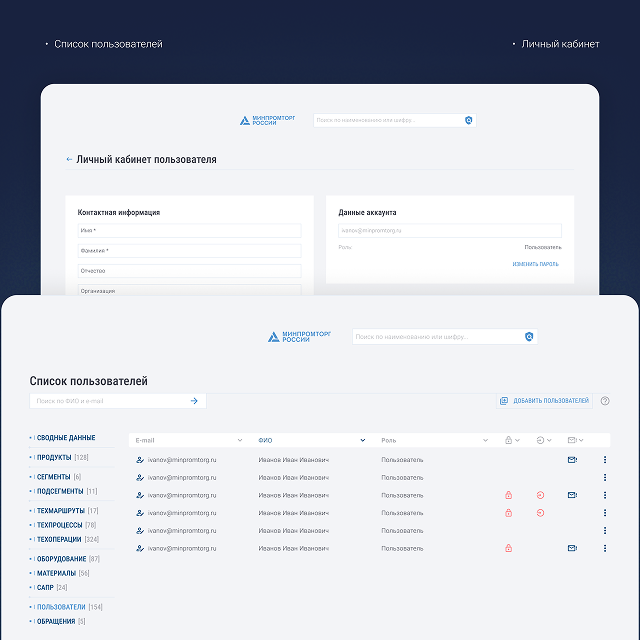
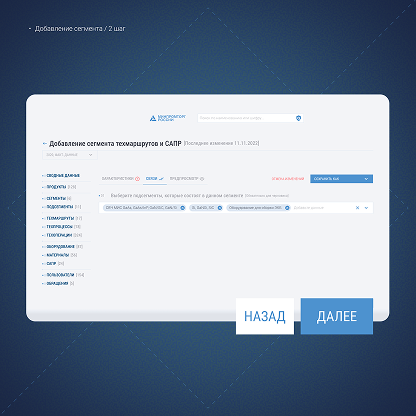
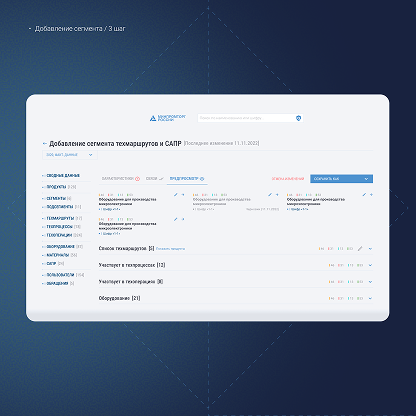
The sections of the application look concise and modern due to a well-thought-out grid, neat typography and uniform rules for tables, cards and forms. Navigation, filters, and search help you find what you need quickly, while delicate animations and responsive layout make working comfortably on different screens.
03
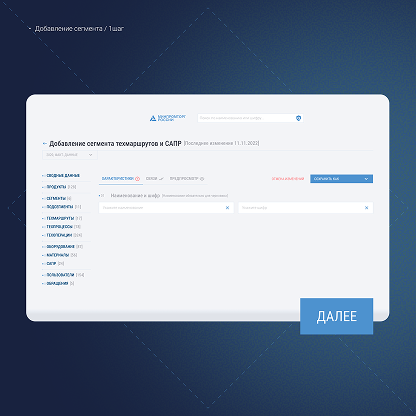
We implemented the collection of information from Excel and parsing tables to fill the system with data from external documents and reduce the amount of manual work when maintaining reference books.
04
Since the service is focused on working use within a professional contour, the interface was designed for the desktop version — with an emphasis on ease of navigation, reading large amounts of information and working with a complex data structure.
// Result
The result is a specialized service that helps structure knowledge about product production and makes the process of working with reference books much clearer. The system combined data on materials, equipment, and production steps into a single logic, simplified navigation through complex information, and provided users with a convenient tool for working in the context of import substitution tasks. The service has not remained a concept, but continues to be used in work.